- 10 minutes
- Serves 4
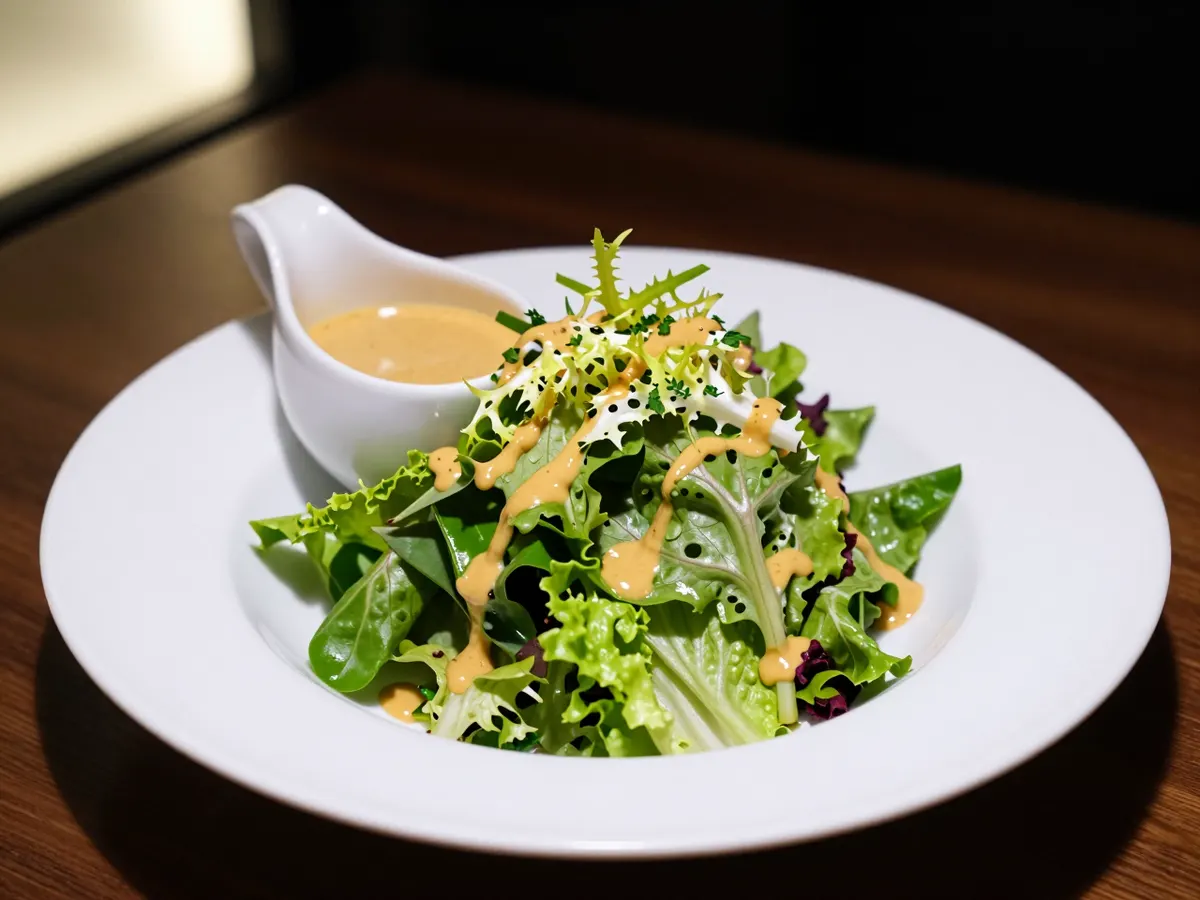
Our own recipe. The photograph is AI-generated.
Ingredients
- 1 round lettuce (butterhead)
- 2 little gem lettuces
- Half a cucumber
- 40g watercress or rocket
- 1 teaspoon Dijon mustard
- 1 tablespoon lemon juice (from about half a lemon)
- Half a teaspoon maple syrup
- A pinch of salt
- Black pepper
- 3 tablespoons olive oil (extra virgin if you have it)
- A small handful of fresh chives (about 10g)
Let's cook
- Pull the lettuces apart into separate leaves. Keep the small inner leaves whole and tear the larger ones in half. Wash them in a bowl of cold water, lift them out and dry them well in a salad spinner or a clean tea towel. Dressing slides off wet leaves.
- Cut the cucumber in half along its length, scrape out the seeds with a teaspoon, then slice it thinly into half moons.
- Make the dressing in a clean jam jar: put in the mustard, lemon juice, maple syrup, salt and a good grind of pepper. Add the oil, put the lid on and shake hard for 20 seconds, until it is thick and creamy looking.
- Snip the chives into short lengths with scissors.
- Just before serving, put the leaves, cucumber and watercress in a large, wide bowl. Shake the dressing again, pour over about two thirds and toss gently with your hands until every leaf is lightly coated. Add more dressing only if it needs it.
- Scatter over the chives and serve straight away.
Tips
- Dress the salad at the last minute. Leaves go limp within 10 minutes of meeting the dressing.
- The mustard is what holds the oil and lemon together in a creamy dressing, so shake it well.
- The dressing keeps in the jar in the fridge for 5 days. Shake it again before using.
Swaps
- Without mustard: leave it out and shake the oil and lemon hard. The dressing is thinner but still good.
- Sharper: use 1 tablespoon of cider vinegar instead of the lemon juice (vinegar can contain sulphites).
Tags
In Twenty minute dinners, Plant powered.
Contains: Mustard, Sulphur dioxide and sulphites .
Of the 14 allergens, this recipe contains mustard, in the Dijon mustard. Many Dijon mustards also contain sulphites, from wine or a preservative, so sulphites are listed too; check the jar.
Check every packet for allergens.